

Free Education Guide!
Teachers and educators, download our free PDF education guide for this show, which will help you incorporate Chatterbox into your classroom!
Written by Marques Brown, Education Director.
Cast & Crew
Rip Van Winkle: Greg Krosnes
Ensemble: Jenny Smith
Ensemble: Laurence Goodwin
Ensemble: Randal Cooper
Ensemble: Robert Arnold
Sound Effects: Jenny Smith
Sound Effects: Laurence Goodwin
Musician: Robert Arnold
Producer: Eric Sefton
Adaptation: Robert Arnold
Director: Robert Arnold
Announcer: Tom Badgett
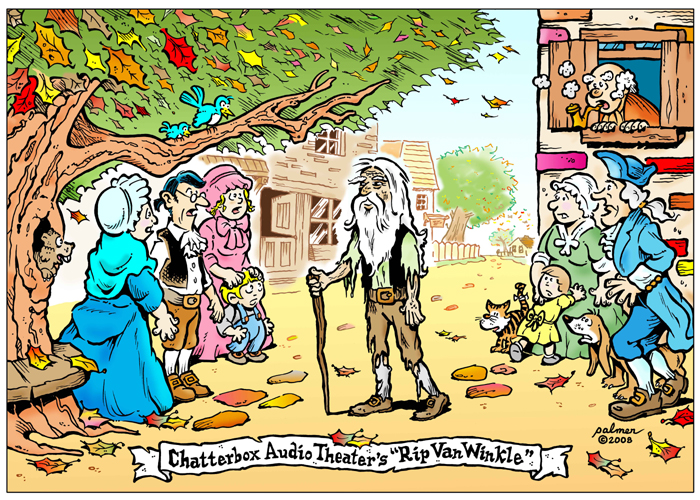
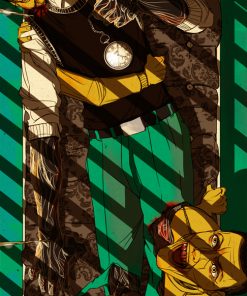
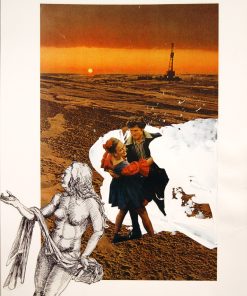
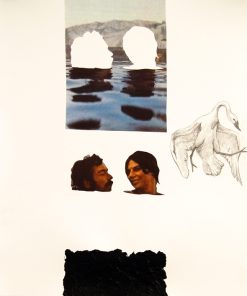
Artist: Jim Palmer
Special Thanks to:
- Debbie Litch, Kell Christie, and Amy Salerno Hale of Theatre Memphis
Notes
Born in 1783, five months before the Treaty of Paris ended the Revolutionary War, Washington Irving could be considered the first truly American author, and at any rate was the first American to make a living solely from his writing. The youngest of 11 children, Irving not only wrote some of the earliest examples of the modern short story, but was also an accomplished folklorist, essayist, biographer, and historian.
According to legend, “Rip Van Winkle” was written over the course of a single night, while the author was living with his sister in Birmingham, England. It was published (with Irving’s equally well-known “The Legend of Sleepy Hollow”) in 1819 in The Sketch Book of Geoffrey Crayon. Along with James Fenimore Cooper’s Leatherstocking Tales, The Sketch Book became one of the first works of American fiction to gain a wide readership in Europe.
Though world literature is replete with tales of men falling asleep for many years, the specific plot of “Rip Van Winkle” is borrowed nearly wholesale from two German folk stories: “Peter Klaus the Goatherd” by J.C.C. Nachtigal and “Karl Katz” by the Brothers Grimm. Irving’s story adds the distinctly American element of a ghostly band of sailors, said to be the crew of explorer Henry Hudson. In 1609, Hudson was hired by the Dutch East India Company to find a passage from the Atlantic Ocean to the Pacific Ocean and therefore the Orient. The expedition began farther north, but, facing a potential mutiny from his crew, Hudson veered south to warmer climes. He explored the eastern coast of the New World, eventually navigating up the river that now bears his name; in so doing, he opened up present-day New York (originally called New Amsterdam) to Dutch settlers. On a subsequent voyage, while exploring what is now known as Hudson Bay, Hudson fell victim to a mutiny led by his longtime crewman Robert Juet. Hudson and those loyal to him were set adrift in a small boat with no food, never to be seen again.
These are the strange undercurrents upon which Irving’s story rests. Despite its airy tone, “Rip Van Winkle” explores issues of loss, disaffection, and the inevitability of change. But Rip’s continuing bloodline — and the undisturbed presence of those mysterious Kaatskill mountains — remind us that not everything must fall victim to the passage of time.
—Robert Arnold


Reviews
There are no reviews yet.